Analysis · Defence · Indo-Pacific
Into Gear
Defence Industrial Cooperation: Australia, Japan and the United States
AUKUS has set out an ambition unprecedented in Australian strategic history. Delivering on it demands an industrial transformation — in workforce, supply chain, and governance — that no government can achieve alone.
 December 2025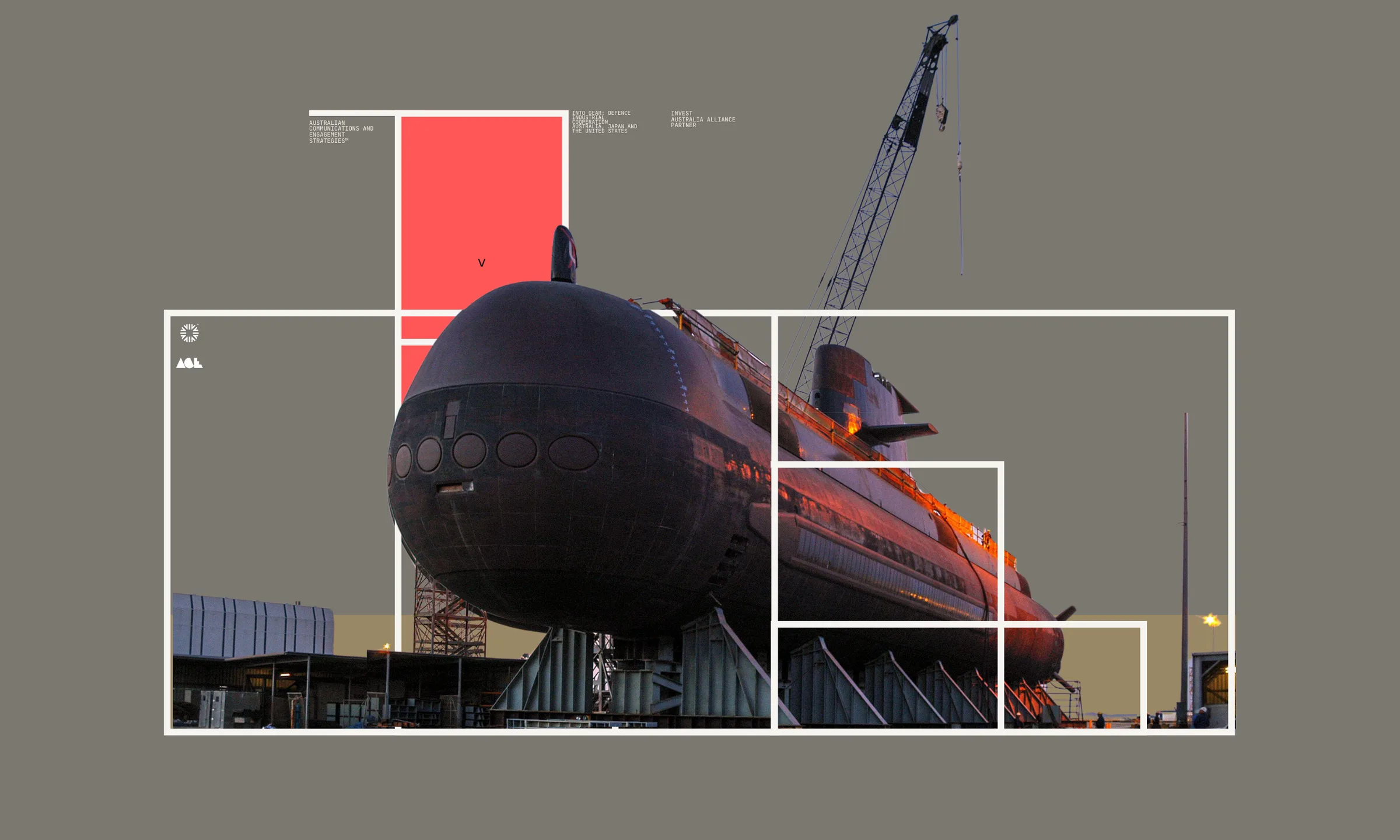
Three nations. One agenda. And a window of strategic opportunity that will not remain open indefinitely.
The announcement of AUKUS in September 2021 reordered Australia's strategic posture in ways that are still working through policy, industry, and politics. The architecture is now clearer: nuclear-powered submarines, advanced technology sharing, a deepening of the Australia–United States–United Kingdom relationship. And with Japan's integration into Pillar II, a fourth major democracy is adding its industrial weight to the partnership's potential.
But potential is not the same as capacity. And capacity, in the defence industrial context, cannot be conjured quickly.
The Challenge Before Us
Australia's submarine decision is arguably the most consequential defence procurement decision any Australian government has ever made — not just in dollar terms, but in the depth of strategic and industrial transformation it demands. The acquisition of three to five Virginia-class submarines from the United States, followed by the construction of the SSN-AUKUS class beginning in the late 2030s, requires a sovereign industrial base that does not yet fully exist.
This is not a criticism. It is a condition. And it is the condition this paper addresses.
The submarine program will succeed or fail in the shipyards, not the treaty halls.
The United States submarine industrial base — the most sophisticated in the world — is currently producing Virginia-class submarines at roughly 1.3 per year, against a stated requirement of 2.3. That gap reflects decades of post-Cold War under-investment in shipbuilding capacity. The UK's program faces its own pressures. Australia is, in many respects, starting from the beginning.
The question before policymakers in all three capitals is not whether AUKUS is worth pursuing — it plainly is — but what structural changes are required to give the program the industrial foundation it needs to succeed on its stated timelines.
What the Research Shows
This paper identifies three structural preconditions for success.
The first is workforce. Shipbuilding is not a skill set that can be scaled quickly. A submarine-quality workforce — capable of working with nuclear materials, complex systems, and the exacting tolerances that underwater warfare demands — is built over decades. The pipeline from apprenticeship through journeyman to master tradesperson is long. The pipeline from master tradesperson to institutional knowledge is longer still. Australia must begin immediately. Not planning to begin. Beginning.
The second is supply chain. The specialised materials, components, and systems that go into nuclear-powered submarines are not available off the shelf. They are produced by a small number of certified suppliers operating under tight quality and security controls. Building an Australian supply chain means developing domestic capacity in some areas, and establishing the treaty and technology-transfer frameworks that allow trusted partner inputs in others.
Workforce is the long pole in the tent. You cannot build submarines faster than you can train the people who build them.
The third is governance. Defence acquisition reform is not new to Australian politics. But AUKUS demands reform that is real and durable, not rhetorical. The administrative burden of existing export control frameworks — even between Five Eyes partners — introduces friction that the program cannot afford at scale. Streamlining those processes, while maintaining essential security protections, is a policy task that must be addressed at the head-of-government level.

The Japan Dimension
Japan's deepening involvement in AUKUS Pillar II introduces a significant new variable — and a significant new opportunity. Japan brings to the partnership world-class industrial capacity in electronics, materials, and maritime systems. Its submarine program is among the most capable conventionally-powered programs in existence. And its changed constitutional and political environment has, over the past decade, made genuine defence industrial cooperation increasingly viable in ways that were not possible a generation ago.
The challenge is not industrial capacity. Japan has that. The challenge is building the institutional frameworks — legal, diplomatic, and industrial — that allow genuine technology sharing across three distinct legal and cultural ecosystems. That work is underway. It must accelerate.
Getting Into Gear
The paper's recommendations are specific. A dedicated AUKUS Industrial Workforce Fund, capitalised jointly by partner governments, to support apprenticeship pipelines, trade exchanges, and academic programs in submarine-relevant engineering and materials science. A streamlined technology-transfer framework that removes unnecessary friction between trusted partners while maintaining robust security protections. A joint industrial council — at CEO and ministerial level — meeting quarterly to track deliverables against the program's stated timelines.
Strategic partnerships are tested not in the signing ceremony, but in the years of implementation that follow. Australia, Japan, and the United States have demonstrated the strategic will to build something genuinely new in the Indo-Pacific. The task now is building the industrial machinery to match that ambition.
The window is open. The time to get into gear is now.
Related Analysis
Prepared by Skills Frontier for the U.S. Mission to Australia. Workforce gaps, training pathways, and supply chain development strategies for the AUKUS submarine program.
Download arrow_forward
Federal MRP model across 8,424 respondents. One Nation surges to 27% nationally. Seat projection: Labor 83, One Nation 52, Coalition 9.
Download arrow_forward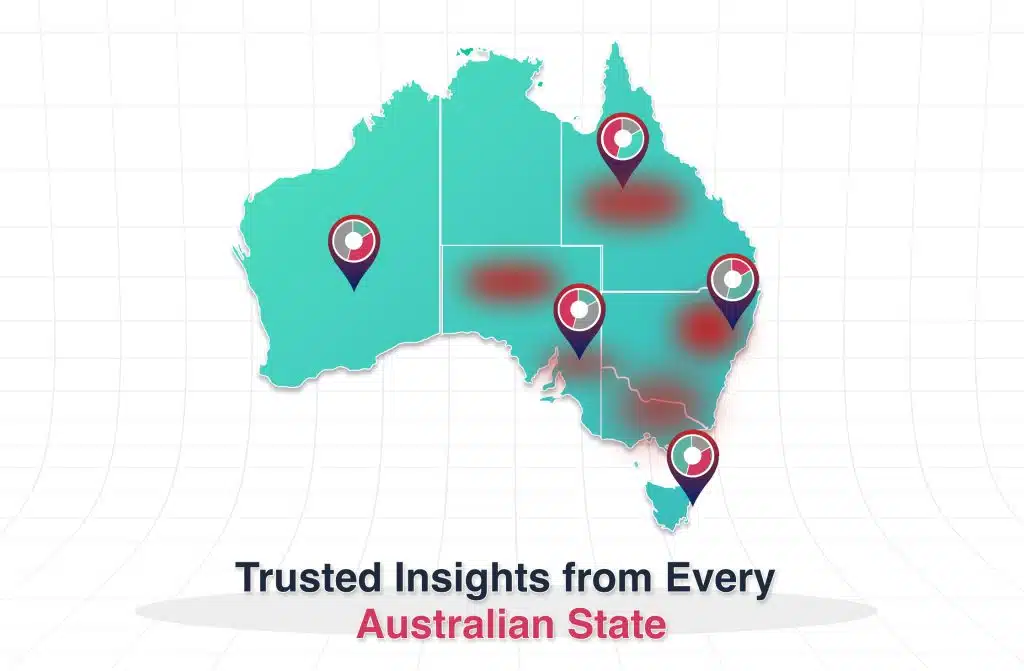
Examining DemosAU's track record of accuracy across state and federal elections and its rigorous methodology as a member of the Australian Polling Council.
Download arrow_forward